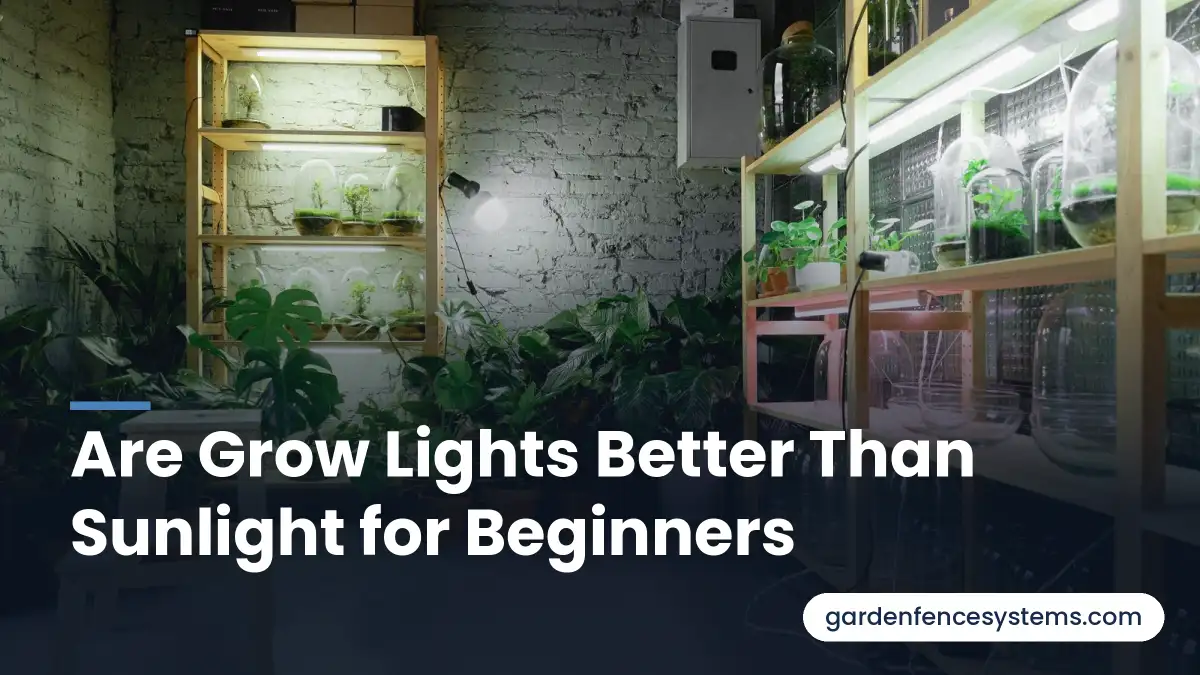
Are Grow Lights Better Than Sunlight for Beginners
As an Amazon Associate we earn from qualifying purchases. Guides are for general information; always check your owner's manual and consult a qualified mechanic when unsure.
Plants need light to grow. But not all light is the same. Sunlight has fed gardens for millions of years. Grow lights now match or beat the sun in many ways. So, are grow lights better than sunlight? The answer depends on your crop, your space, and your goals. Let us look at the facts. Sunlight gives plants a full range of colors.
It includes UV and infrared rays. These spark key plant responses. But sunlight changes all day long. Clouds, trees, and buildings block it. Winter days are short. Summer days are long. A grow light gives you steady, full power all day. You pick the colors your plants need most. Always follow official safety and maintenance guidelines for best results.
A grow light can target red and blue peaks. These match chlorophyll absorption best. Sunlight spreads energy across many colors. Much of that light goes to waste. Plants only use certain wave lengths for photosynthesis.
The rest just heat up leaves. This is a key edge for LED grow lights.
Are Grow Lights Better Than Sunlight for Specific Crop Categories: A Direct Comparison
Leafy greens like lettuce and spinach thrive under both sun and light. But grow lights let you grow them in a basement. You get crisp leaves year-round. Fruiting crops like tomatoes and peppers need intense light.
They need a high daily light integral (DLI). Sunlight often falls short in winter. A strong LED panel fills that gap. You get more fruit per plant. For complementary picks and expert testing advice, see our guide on How to Grow Weed From Seed Without Lights for Beginners.
Cannabis and other medicinal plants are a big case. These crops need precise light recipes. Red light boosts flower growth. Blue light tightens leaf structure. UV light can increase resin production. Sunlight gives you some of this. But a full spectrum LED gives you control. You dial in each color band. The result is often higher potency and better smell.
Herbs like basil and mint also do well. They need moderate light. A simple shop light can work. But a dedicated grow light speeds up growth. You get more harvests per year. The light stays steady. No clouds or shade trees to slow things down.
Root crops like carrots and beets need less light than fruiting plants. They still benefit from steady artificial light. A basic fluorescent strip works well for them. You can grow these in a dark closet with success.
Microgreens and sprouts are another easy case. They grow fast under simple LEDs. You do not need a strong panel. A small light strip on a shelf works great. These crops fit well on a kitchen counter.
- Leafy Greens: Lettuce and spinach grow fast under both sun and LED panels.
- Fruiting Crops: Tomatoes and peppers need high DLI. Grow lights fill winter gaps.
- Medicinal Plants: Red and blue light bands boost flower and resin production.
- Herbs: Basil and mint thrive with steady light and faster harvest cycles.
- Root Crops: Carrots and beets do well with moderate fluorescent light.
- Microgreens: Sprouts thrive on small LED strips in tight spaces.
Measuring Light Quality: How Par, Ppfd, and Dli Metrics Reveal the Real Difference
Plants use a special range of light. It is called photosynthetically active radiation (PAR). This is the light that drives photosynthesis. But PAR alone does not tell the whole story. You need to measure photosynthetic photon flux density (PPFD).
This tells you how many light particles hit each square meter. Sunlight at noon can top 2,000 micromoles. A cheap LED panel might give 400. A high-end model can reach 1,000 or more.
Daily light integral (DLI) adds it all up. It counts total light over a full day. A tomato plant needs about 20 to 30 moles per square meter per day. In many northern states, winter sun gives you half that. A grow light fills the rest. You get a full 24-hour light budget. You do not rely on a clear sky.
Spectroradiometers measure the exact color mix. They show which wave lengths a light source gives off. Sunlight has a smooth curve. It rolls off in deep red and far red.
Some grow lights spike in these zones. That spike matches chlorophyll absorption peaks. This is why are grow lights better than sunlight for precision growing. You can tailor the spectrum to each growth stage.
Start by reading the maker’s PPFD map. This map shows light intensity at different heights. Hold the sensor at your canopy level. Move it slowly across the grow area. Note the lowest and highest readings. You want a fairly even spread.
Use a simple timer to track run hours. Add up the total light hours per day. Then multiply by the average PPFD. This gives you a rough DLI estimate. It helps you compare sun and lamp setups side by side.
- PAR Range: Only light between 400 and 700 nm drives photosynthesis in plants.
- PPFD Reading: A quantum sensor measures micromoles hitting your leaf canopy per second.
- DLI Total: It sums up all light over a day to show your true dose.
- Spectrum Check: A spectroradiometer reveals exact color spikes in your lamp output.
Controlling the Photoperiod: Where Artificial Lighting Outperforms Natural Sunlight
Photoperiod is the length of day and night. Many plants use it to decide when to flower. Short-day plants need long nights. They flower when nights are over 12 hours. Long-day plants bloom when days get longer.
Sunlight sets your photoperiod by the season. You cannot change it easily. A grow light gives you full control. You set the timer. You decide when plants wake up and sleep.
Light deprivation is a big use case. Growers use black-out tarps to block sun. Then they add lights to create a 12-hour day. This forces plants to flower on demand. You can run multiple crops per year. Sunlight alone cannot do this. You need the timer and the lamp. This is one clear spot where are grow lights better than sunlight for commercial growers.
Photomorphogenesis is how light shapes plant form. Blue light keeps stems short and leaves thick. Red light pushes stem stretch and flowering. Far-red light can trigger shade avoidance. Plants grow tall and spindly to reach more light.
A grow light lets you mix these signals. You can keep plants compact and bushy. You can boost flower sites. The sun gives you a fixed mix. You cannot change it on the fly. Smart growers shift the spectrum as plants mature.
For vegetative growth, use more blue light. This keeps plants stocky and dense. For bloom, add more red light. This encourages flower formation. Some LEDs allow you to switch modes. Others let you dim specific color channels. Use these controls to match each growth phase.
Set your light cycle to match the plant type. A 18/6 schedule works for most greens. A 12/12 schedule triggers flowering in short-day plants. Keep the dark period very dark. Even small light leaks can disrupt bloom timing.
- Timer Control: A simple outlet timer sets exact day and night lengths for plants.
- Light Dep: Black-out tarps plus lamps force flowering on demand for short-day crops.
- Blue Light: It keeps stems short and leaves thick for compact, sturdy plants.
- Red Light: It drives stem stretch and flower site formation during bloom phases.
Heat Management and Canopy Microclimate: The Overlooked Efficiency Factor
Sunlight brings raw energy. But that energy also brings heat. Grow lights give you control over this heat. That matters more than most growers think.
A hot canopy stresses plants. It speeds up transpiration. Roots can’t keep up. Plants close their stomata. Growth slows down fast. For complementary picks and expert testing advice, see our guide on How to Grow Tomatoes Under Lights Step by Step Guide.
Start by measuring canopy heat. Use a simple infrared thermometer. Point it at the top leaves. Do this at mid-day and again at night. You want steady readings between 70°F and 85°F.
- Infrared Spectrum: Sunlight packs deep IR waves. These waves warm leaf surfaces fast. LEDs put out much less IR heat.
- Canopy Thermometer: A simple digital probe tells all. Keep leaf temps between 70°F and 85°F for best results.
- Ventilation Stack: Add a low-speed clip fan. It breaks the hot air layer right at the top of the canopy.
- Heat Stress Signs: Watch for leaf curl and bleaching. Those mean your canopy is running too warm.
HPS bulbs throw a lot of heat. You need strong exhaust fans to handle them. LED panels run much cooler. This cuts your cooling costs. It also lowers the risk of heat damage. The air stays more stable around your plants.
Place your lights at the right height. Too close and you risk heat burn. Too far and you lose intensity. Follow the maker’s spacing guide. Then adjust based on your canopy temp. A light mover can help spread the heat evenly.
Are grow lights better than sunlight when heat control matters? In small spaces, the answer is often yes. You can dial in the exact heat. Sunlight can spike past 100°F under a lensing effect. That can cook tender leaves in minutes.
In a sealed grow tent, heat builds fast. Use a carbon filter and inline fan. This pulls hot air out of the tent. It also helps control humidity. Stable air means stable plant growth.
Cost Per Gram of Yield: Running a Financial Analysis Across Lighting Scenarios
Sunlight has a $0 electricity cost. But that’s not the full story. You still pay for the space. You pay for tents or greenhouses. You pay for HVAC to manage heat and humidity.
LED setups cost more upfront. But they save on power over time. A modern full-spectrum LED uses about half the wattage of HPS. That adds up fast across a long grow cycle.
To find your true cost per gram, track three things. First, your total energy use in kilowatt-hours. Second, your bulb or fixture lifespan. Third, your total dry weight yield. Divide your energy cost by your yield weight. This gives you a clear number to compare.
Make a simple spreadsheet. List your fixture cost, wattage, and daily run hours. Then add your local electricity rate. Multiply to get your daily cost. Over a 3-month grow cycle, this adds up fast.
Also factor in the cost of spare bulbs. HPS lamps lose output over time. You may need to replace them each year. LEDs last much longer. They still fade slowly but over many years.
- LED Efficiency: Modern LEDs give more usable light per watt. They waste less energy as heat. This lowers your monthly power bill.
- HPS Heat Penalty: HPS forces you to run extra cooling. That extra AC draw adds hidden cost to your energy use.
- Sunlight Setup: A greenhouse still needs fans and vents. Climate control is not free, even with free sun rays.
- Yield Quality: Denser, more potent buds fetch better prices. This can offset a slightly higher lighting cost per gram.
Are grow lights better than sunlight for your wallet? It depends on your local power rates. In sunny regions, a greenhouse often wins on cost. In dark basements or cold climates, LEDs save real money. Run the numbers for your specific setup before you decide.
Don’t forget the value of your time. Sunlight setups need less monitoring. But they are at the mercy of weather. A grow light setup runs the same way all year. This can save you time and stress.
Practical Methods for Are Grow Lights Better Than Sunlight Decisions in Home Growing
You don’t need lab gear to make a smart choice. Start with your space and your goals. A small flat needs a different answer than a large greenhouse.
First, check your available sunlight. Does your window get 6+ hours of direct south-facing light? If not, supplemental LEDs make sense. Second, think about your crop type. Fruiting plants need more intense light than leafy greens. Third, look at your local climate. Hot summers make outdoor growing harder for heat-loving crops.
Map your growing space before you buy anything. Measure the floor area and ceiling height. Note where the windows face. Check if the room has power outlets nearby. This simple plan saves you money and guesswork.
Start with a small test batch. Use one LED panel on a few pots. Run it for a full grow cycle. Track plant height, leaf color, and yield weight. This gives you real data for your specific setup. For complementary picks and expert testing advice, see our guide on How to Grow Skunk X Northern Lights Feminized.
- Window Space Audit: Map your window hours for a full week. Note which windows get direct sun and which stay shaded.
- Light Meters: A cheap quantum sensor helps you measure actual PPFD. It takes the guesswork out of your setup.
- Crop Matching: Leafy greens thrive on lower light. Tomatoes and peppers need high intensity. Match the light to the crop.
- Hybrid Setups: Use sunlight during the day and LEDs at night. This combo extends your daily light hours without extra heat.
Are grow lights better than sunlight for a home grower? Often, the best path is a mix of both. Use the sun when it’s strong. Use LEDs when you need more hours or more control. This hybrid approach gives you the best of both worlds.
Comparing Lighting Methods: Heat, Cost, and Control
Common Questions About Grow Lights vs. Sunlight
Can Plants Get Too Much Light From Grow Lights?
Yes. Too much light causes photoinhibition. Leaves bleach and stop processing energy. Keep PPFD levels within your crop’s ideal range. Watch for signs of stress like leaf curl.
Do Grow Lights Use a Lot of Electricity?
- Modern Leds: Modern LEDs are very fast.
- They Use Less: They use less power than older HPS setups.
- Your Actual Cost: Your actual cost depends on your local electricity rate and run hours.
Is Sunlight Ever Enough on Its Own for Indoor Grows?
Bright south windows can work for herbs and greens. But fruiting plants usually need more intensity. They need supplemental light to thrive indoors.
What Is the Biggest Mistake Growers Make with Lighting?
They hang lights too high. This spreads the light out too much. Keep the light source close enough for strong PPFD without burning leaves.
Are Grow Lights Better Than Sunlight for Year-Round Growing?
In most indoor setups, yes. You control the hours and intensity. Sunlight changes with the seasons. LEDs give you steady conditions all year long.
Can I Use a Regular Household Bulb to Grow Plants?
A standard bulb gives very little usable light. It lacks the right color spectrum. Plants need red and blue wavelengths for growth. A regular bulb will not support strong growth.
Do Grow Lights Work for Seedlings and Clones?
Yes. Young plants need gentle light. Use a low intensity setting at first. Keep the light source a bit further away. Gradually raise the intensity as the plants grow.
| Factor | Direct Sunlight | Full-Spectrum LED | HPS / HID |
|---|---|---|---|
| Upfront Cost | Low (greenhouse frame) | Medium to High | Low to Medium |
| Heat Output | High (uncontrolled) | Low (cool to touch) | Very High |
| Energy Cost | $0 electricity | Low to Medium | High |
| Spectral Control | None (weather varies) | Full (tunable spectrum) | Limited (fixed spectrum) |
| Best For | Large greenhouses | Indoor and small spaces | Budget flowering stages |
Final Thoughts and Next Steps
Sunlight is a strong, free resource. But it comes with limits you can’t control. Clouds, seasons, and window angles all change the light your plants receive. Grow lights give you a steady hand. You decide the intensity, the spectrum, and the hours. That control leads to more predictable harvests.
Are grow lights better than sunlight? For many growers, the answer is yes in key ways. You get precision, you get steadiness, and you get better heat management. The best choice fits your space, your budget, and your crop. Start small. Test a single LED panel on a few plants. Track your results. Then scale up what works best for you.